Rooflines & Eaves
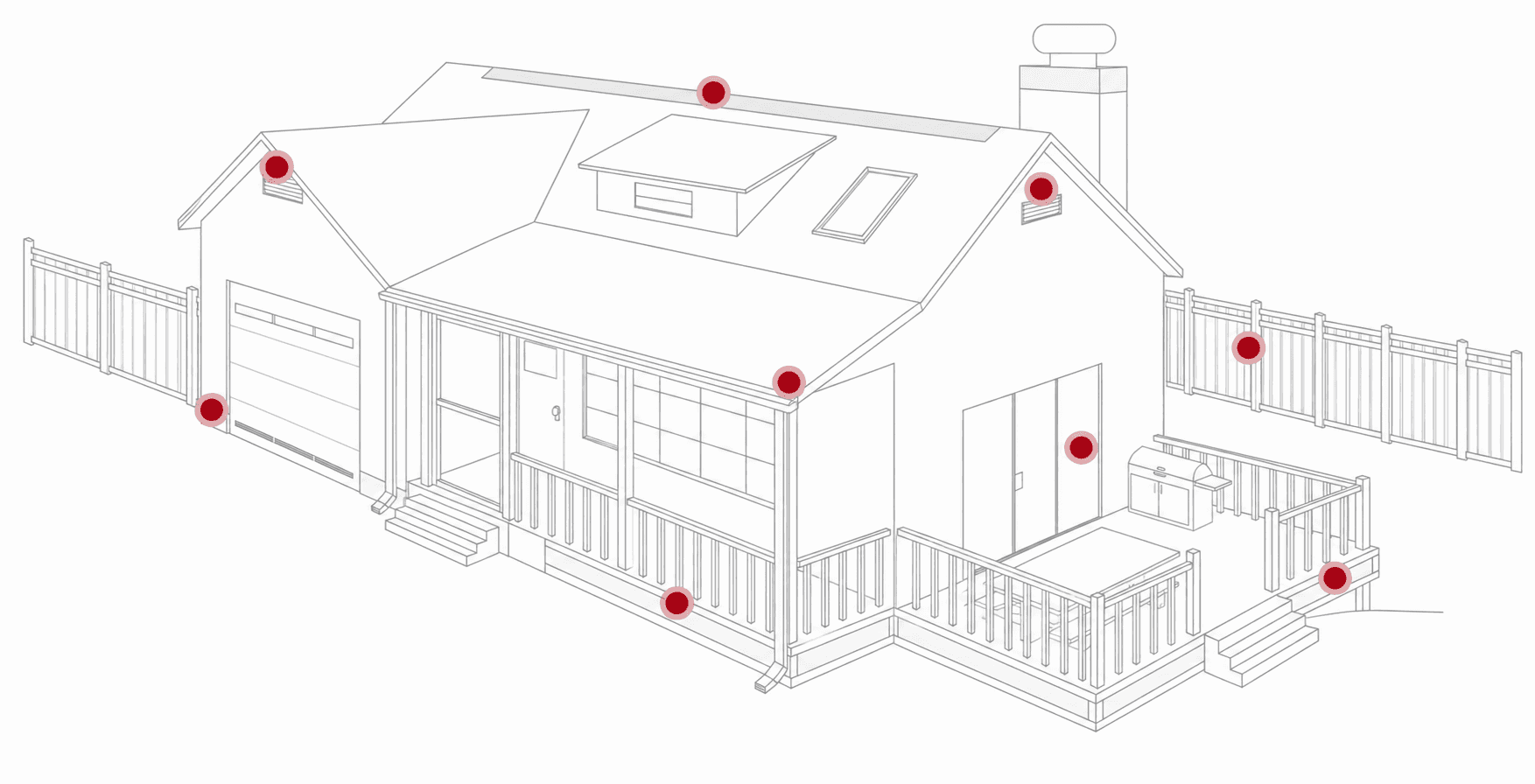
Avoid complex rooflines that trap debris. Enclosed or boxed eaves with non-combustible material. Avoid exposed rafter tails.

Learn field-tested fire-safe strategies, material choices, and design approaches with partner-backed resources focused on safer, more resilient homes.
Thank You


Sections in This Guide
Wildfires are becoming more frequent and more destructive. Building or remodeling with fire-resilient strategies isn't just smart — it's essential for protecting families, communities, and investments. Our Learning Center makes it simple to understand the latest best practices, products, and design approaches that help homes stand strong.
Spotlight Stories
Matt Risinger of Build Show’s video documenting two homes that survived the 2025 LA fires because of specific construction choices. Essential viewing for building pros and homeowners alike.
Skip to minute 7:14 to see an incredible example of a six-month-old home that stayed standing in a residential neighborhood – while the rest of the block burned – and the design and material choices that saved it!
We are immensely grateful to Mike Fredy and the leadership team at Evolution for their tireless work expanding wildfire safety education, and for their support in building this incredible resource. Steel deck framing is one of the most impactful upgrades a building professional can specify in WUI zones — non-combustible, durable, and increasingly code-preferred.
Sign up to join the Fortress Community of Contractors and enjoy exclusive perks, rebates, and access to specialized training.
Materials That Protect
Roofing and vents are the two most important areas to address.
The following Fire-Safe Business Directory is provided by our esteemed education partner, the California Fire Safe Council. We encourage our Pros to participate in the directory and become actively involved in wildfire mitigation education and join the list! Showcase your products and services to the entire Fire Safe Council network, currently over 300 across the state reaching thousands of homeowners and organizations.
Defensible Space & Landscaping
Smart Design & Construction
Avoid complex rooflines that trap debris. Enclosed or boxed eaves with non-combustible material. Avoid exposed rafter tails.
Steel-framed decks (see Spotlight above). WUI-rated composite decking. Clear underneath — no storage of combustibles.
Rooftop and perimeter sprinkler systems dramatically improve survival odds. Increasingly required by insurers.
Often overlooked — a major vulnerability. WUI-rated doors or fire-blocking retrofit kits available.
Replace with ember-resistant vents rated 1/16" mesh or finer. One of the top wildfire entry points.
Highest-impact upgrades in order: (1) vents, (2) Zone 0 non-combustibles, (3) deck and eave materials, (4) windows.
Community, Organizations & Safety Resources
California’s primary wildfire agency. Manages Chapter 7A compliance, the Building Materials Listing program, home hardening initiatives, and community preparedness funding.
https://www.fire.ca.govCoordinates state agencies, federal partners, and local governments. Sets broad policy direction and tracks progress on landscape-scale resilience.
https://wildfireresiliency.ca.govExcellent Fire Safe Vendor List — now searchable online. Categories cover materials, landscaping, mitigation services, and more.
https://cafiresafecouncil.org/Active local council for Marin County. Great resource for Sausalito-area homeowners and pros working in the North Bay.
https://www.firesafemarin.orgLeads the Wildfire Defense Certification for contractors. Expanding in 2025-26 with green rebuilding training and digital tools for the building industry.
https://usgbc-ca.org/wildfire-defense-rebuilding/The research backbone behind wildfire home hardening science. Runs Wildfire Prepared Home and Wildfire Prepared Neighborhood programs in 15 states.
https://ibhs.orgPublishes NFPA 1 (WUI Chapter 17), Firewise USA, and wildfire research fact sheets. Essential codes and community programs resource.
https://www.nfpa.orgScience-based designation for homeowners. Potential insurance discounts in California. Available in 15 states.
https://wildfireprepared.org/Develops the International WUI Code (IWUIC). Brings together contractors, engineers, inspectors, and code officials on national standards.
https://www.iccsafe.orgWUI training for building officials, fire service personnel, and planners. Free federal resources on land use, code adoption, and fire behavior.
https://www.usfa.fema.gov/wui/Training & Certification
California’s leading certification for contractors and landscapers. Has educated 1,300+ professionals over three years. Expanding in 2025-26 with green rebuilding modules and community workshops funded by the Clean Power Alliance.
Visit resourceFree training from California’s Office of the State Fire Marshal for building officials, builders, and fire service personnel on Chapter 7A compliance, the BML listing tool, and the WUI Products Handbook.
Visit resourceFederal courses covering land-use planning, code adoption, evacuation planning, and wildland fire behavior for structural firefighters and building officials.
Visit resourceScience-based designation now in 15 states. Homeowners complete a verified checklist and earn a certificate — with potential insurance discounts through CDI-mandated carrier programs in California.
Visit resourceCommunity-level program helping neighborhoods reduce wildfire risk collaboratively. Over 1,700 recognized communities nationwide. Valuable context for pros working in existing neighborhoods.
Visit resourcePodcasts & YouTube
Hosted by wildfire prevention specialists, retired fire captains, and fire marshals. Practical education for homeowners, communities, and businesses.
Open podcastFrom North State Public Radio — a critical look at how California’s fire-prone forests have been managed and how to be better stewards of the land.
Open podcastExplores stories and strategies shaping modern wildfire management — leadership, solutions, and community protection at the WUI.
Open podcastPremier podcast for wildland firefighting culture, mental health, and physical performance. Long-form interviews with firefighters, scientists, and doctors.
Open podcastHosted by Kate Cagle. Examines what failed in the 2025 LA fires and the path to a more resilient future. Essential listening post-2025.
Open podcastCrisis communications and chaos management during wildfires and floods. Expert insights on preparation and community response.
Open podcastHome hardening demonstration burns and practical WUI education. Directly applicable for California homeowners and building professionals.
Open channelAdditional CAL FIRE video content covering fire behavior, training, and community education.
Open channelBuilder passionate about high-performance construction. Covers fire-resiliency, building science, insulation, air sealing, HVAC, healthy buildings, and product reviews. Highly recommended for building pros.
Open channelScience-based videos showing exactly how homes fail in wildfires — burning gutters, ember intrusion, radiant heat. Essential for product and construction decisions.
Open channelMarin County wildfire education videos. Highly relevant for North Bay homeowners and pros.
Open channelPolicy and landscape-scale resilience efforts across California. Good for understanding regulatory direction.
Open channelCAL FIRE-funded series of nine videos on wildfire preparedness, fire ecology, home hardening, and defensible space.
Open channelCodes & Standards
Materials and construction methods for exterior wildfire exposure. The baseline standard for all new construction in California’s high fire hazard severity zones since 2008. Free OSFM online training available.
Visit resourceThe definitive California reference for code-compliant materials in WUI zones. Updated September 2025. Required for contractors, inspectors, and specifiers.
Visit resourceDeveloped by NIST, CAL FIRE, and IBHS using lab research and post-fire field data. Science-first framework for systematically hardening structures.
Visit resourceThe ICC’s model code establishing prescriptive and performance requirements for WUI areas. Referenced by jurisdictions nationwide.
Visit resourceNFPA’s fire code: ignition-resistant construction, defensible space, fire protection plans, and automatic sprinkler systems for WUI areas.
Visit resourceEnacted July 2025 — a leading-edge state model being watched nationally. Requires Class 1 and Class 2 structural hardening in WUI zones. Useful benchmark for CA professionals.
Visit resourceFunding — Grants, Financing & Loans
Reduced pricing on materials for neighborhoods + connections to grant-issuing organizations — wildfiredefensemesh.com/community/home
Visit community groupState funding for defensible space, prescribed burns, and community resilience projects — fire.ca.gov/grants
View grantsFederal grants for homeowners and communities post-disaster — fema.gov/hazard-mitigation-grant-program
View programLow-cost retrofit grants for qualifying homeowners — californiaresidentialmitigation.com
View retrofit grantsOffers financing on raw land, especially valuable for those in LA looking to rebuild their homes
California CDI-mandated programs require insurers to offer discounts for Wildfire Prepared Home and Chapter 7A-compliant retrofits. Ask your insurer.
Key Documents & Downloads
Definitive California reference for code-compliant WUI materials. Updated September 2025.
View Handbook (PDF)Science framework by NIST, CAL FIRE, and IBHS using lab research and post-fire field data.
View MethodologyResilient rebuilding post-2025 fires: materials, fuel bridges, CA Fire Code updates July 2025.
View Resource GuideScience summaries on home vulnerability points: vents, decks, roofs, windows, gutters. Co-published with NFPA.
View Fact SheetsFor design professionals: when and why exceeding minimum code standards is necessary for real resilience.
View ArticleGateway tool for meeting defensible space obligations. Covers all major home vulnerability zones.
Take the SurveyStep-by-step DIY checklist. Science-proven steps that can qualify for insurance discounts.
Download ChecklistPractical low-cost actions: sealing gaps, retrofitting vents, ember-resistant mesh.
View Retrofit ListTemplate for neighborhoods starting a Firewise USA program. Covers assessment, action steps, and annual activities.
Download TemplateAnd more coming soon!
Copyright © The Builder Market 2025. All Rights Reserved. | Privacy Policy